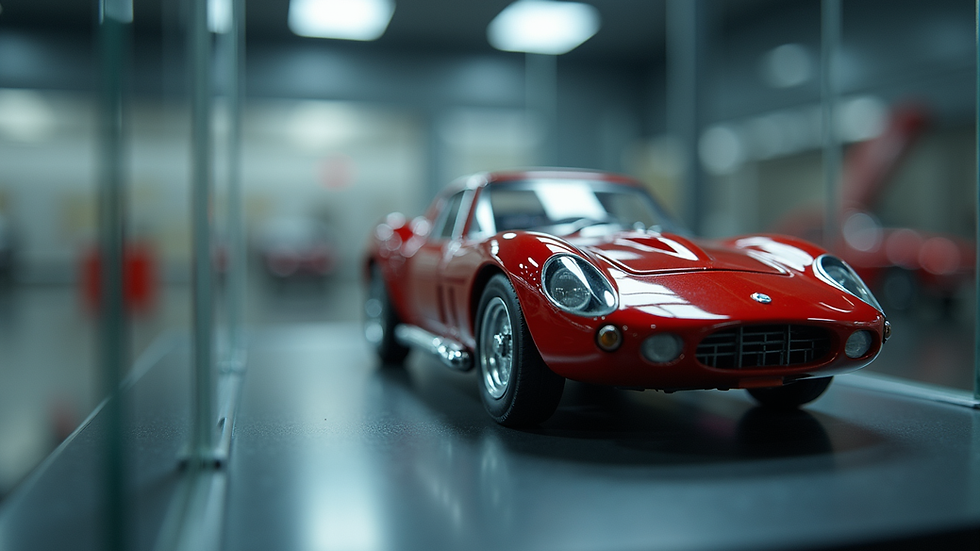
Mastering the Art of Customizing Scale Models: Model Cars
- Mar 12
- 3 min read
Customizing scale models is a rewarding hobby. It lets you bring your model cars to life. You can add personal touches and make each piece unique. This guide will help you master the art of customizing model cars. You will learn practical steps and useful tips to improve your skills.
Getting Started with Customizing Scale Models
Start by choosing the right model car. Pick one that fits your skill level and interests. Beginners should select models with fewer parts and simpler designs. More advanced hobbyists can try complex kits with many details.
Prepare your workspace. Use a clean, well-lit area. Organize your tools and materials. Essential tools include:
Hobby knife
Fine sandpaper
Paintbrushes
Tweezers
Glue designed for plastic models
Before you begin, read the instructions carefully. Understand the assembly process and any special steps for painting or detailing.

Techniques for Customizing Scale Models
Learn basic techniques to improve your model car. Start with cleaning the parts. Remove any mold lines or excess plastic using a hobby knife and sandpaper. This creates a smooth surface for painting.
Painting is key to customization. Use thin layers of paint to avoid obscuring details. Acrylic paints are popular because they dry quickly and clean up easily. Apply primer before painting to help the paint stick better.
Add details like decals, weathering, or custom graphics. Decals can be applied with water and a soft brush. Weathering adds realism by simulating dirt, rust, or wear. Use dry brushing or washes for this effect.
Assembly requires patience. Use small amounts of glue to avoid mess. Hold parts together until the glue sets. Test fit parts before gluing to ensure proper alignment.
Tools and Materials You Need
Having the right tools makes customizing easier. Here is a list of must-have items:
Cutting tools - Hobby knives and sprue cutters for clean cuts.
Sanding tools - Fine grit sandpaper or sanding sticks.
Paints - Acrylic or enamel paints in various colors.
Brushes - Different sizes for detail and broad coverage.
Glue - Plastic cement or super glue.
Decals - For adding logos or designs.
Masking tape - To protect areas when painting.
Tweezers - For handling small parts.
Magnifying glass - Helps with tiny details.
Invest in quality tools. They last longer and give better results. Keep your tools clean and store them properly.

Tips for Achieving Professional Results
Focus on precision and patience. Take your time with each step. Rushing can cause mistakes.
Use thin coats of paint. Multiple thin layers look better than one thick coat. Let each layer dry completely before applying the next.
Practice decal application on scrap pieces first. This helps you avoid tears or bubbles.
Experiment with weathering techniques. Start lightly and build up effects gradually.
Keep your workspace organized. This reduces the chance of losing small parts or mixing colors.
If you want to learn more, check out customizing model cars tips. This resource offers detailed advice and inspiration.
Displaying and Caring for Your Customized Models
Once your model car is complete, display it properly. Use a dust-free case or shelf. Avoid direct sunlight to prevent paint fading.
Handle your models carefully. Hold them by the base or sturdy parts. Avoid touching painted surfaces to prevent oils from your skin damaging the finish.
Clean your models gently with a soft brush or cloth. Avoid water or harsh chemicals.
Join online communities or local clubs. Sharing your work and learning from others can improve your skills and keep you motivated.
Keep Improving Your Customizing Skills
Customizing scale models is a journey. Each project teaches you something new. Try different styles and techniques. Challenge yourself with more complex models.
Document your progress. Take photos and notes. This helps you track improvements and remember what works best.
Stay curious and open to learning. Watch tutorials, read articles, and connect with other hobbyists.
Your passion and effort will show in every model you create. Enjoy the process and the satisfaction of mastering this art.